

The Road to Health workshop at Menoken Farm brought community members together to explore how taste, pleasure and authenticity shape human nutrition, featuring food‑research advocate Mark Schatzker as the keynote speaker.
MENOKEN, N.D. — The Road to Health workshop at Menoken Farm brought community members together to explore how taste, pleasure and authenticity shape human nutrition, featuring food‑research advocate Mark Schatzker as the keynote speaker. The event, hosted by the Burleigh County Soil Conservation District, highlighted how flavor guides dietary choices and influences overall well‑being.
Schatzker, known for books including The End of Craving, The Dorito Effect and Steak, serves as a writer‑in‑residence at the Modern Diet and Physiology Research Center affiliated with McGill University. He discussed how taste acts as essential information, helping the body interpret nutritional value, and how ultra‑processed foods can disrupt that relationship. His presentation covered concepts such as the “bliss point,” artificial flavoring and what he describes as today’s “food casino,” where manufactured flavors mimic foods they are not.
The evening opened with a tasting session designed to help participants distinguish “human flavors” from “nature flavors.” Attendees compared bone broths, salsa and sourdough varieties, noting differences in saltiness, richness and authenticity. Schatzker explained how flavor helps regulate appetite and nutritional needs, and how modern food manufacturing can blunt natural taste, leaving people wanting more even when foods are calorie‑dense — a mismatch between taste, satiety and physiology.
Following the tasting and keynote, guests enjoyed a meal prepared by Kara Winkler, co‑owner of Glimpse of the Prairie. The menu featured homemade wheat tortillas, zucchini cake, chips, salsa and herbs grown onsite. The dishes showcased simple, authentic ingredients that reinforced the workshop’s central message: taste is not just enjoyment — it is information the body relies on.
The workshop underscored how soil health, food authenticity and human well‑being are interconnected — reinforcing NRCS’s mission to support regenerative practices that strengthen both landscapes and communities.
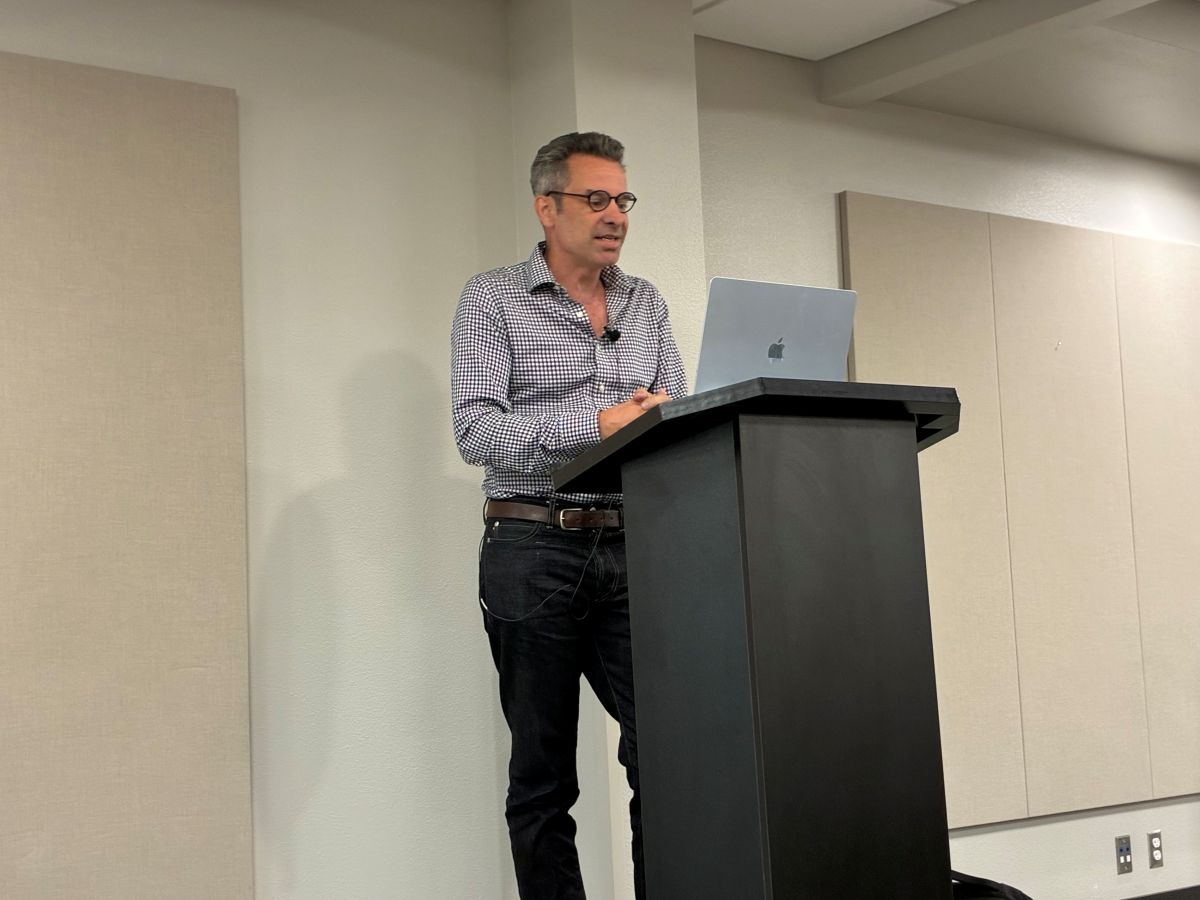
Mark Schatzker, writer in residence at the Modern Diet and Physiology Research Center affiliated with McGill University, delivers a keynote at Menoken Farm on Aug. 27 in Menoken, N.D., explaining how flavor functions as physiological information. His message reinforced a key NRCS priority: healthy soils support healthier food systems and communities, underscoring the connection between regenerative practices and long term well being.

Darrell Oswald, district manager of the Burleigh County Soil Conservation District, offers opening remarks during the Road to Health workshop at Menoken Farm. Oswald welcomed attendees ahead of the evening’s tasting demonstrations and keynote presentation, underscoring the value of strong partner led education in advancing NRCS’s shared conservation and community health goals.

A selection of tasting samples — including bone broths, salsas and sourdough varieties — is arranged for attendees ahead of the Road to Health workshop at Menoken Farm. The foods were used in an early taste test exercise to demonstrate differences between “human flavors” and “nature flavors,” illustrating how authentic taste guides nutritional understanding.
***
USDA is an equal opportunity provider, employer, and lender. To learn more, visit usda.gov.
